
Understanding Fire Assay: The Oldest Method of Gold Purity Testing
Did you know Fire Assay (also know as Cupellation) is one of the oldest and most trusted methods for determining gold purity? Watch our video below to see each step in action!
Here’s how Fire Assay works:
Step 1: Sampling
We begin by sampling to ensure an accurate representation. A small piece of the object goes through the entire assay process, representing the whole. Although It’s small, but don’t let the size fool you – the information we gather from it is incredibly detailed!
Step 2: Weighing
Next, we weigh the sample accurately using a sensitive balance.
Step 3: Addition
We inquart the gold alloy with silver and compound it with lead. This helps bind the base metals and impurities when we heat the sample. Think of it as a purification step—it allows us to separate the good from the bad!
Step 4: Heating The Sample
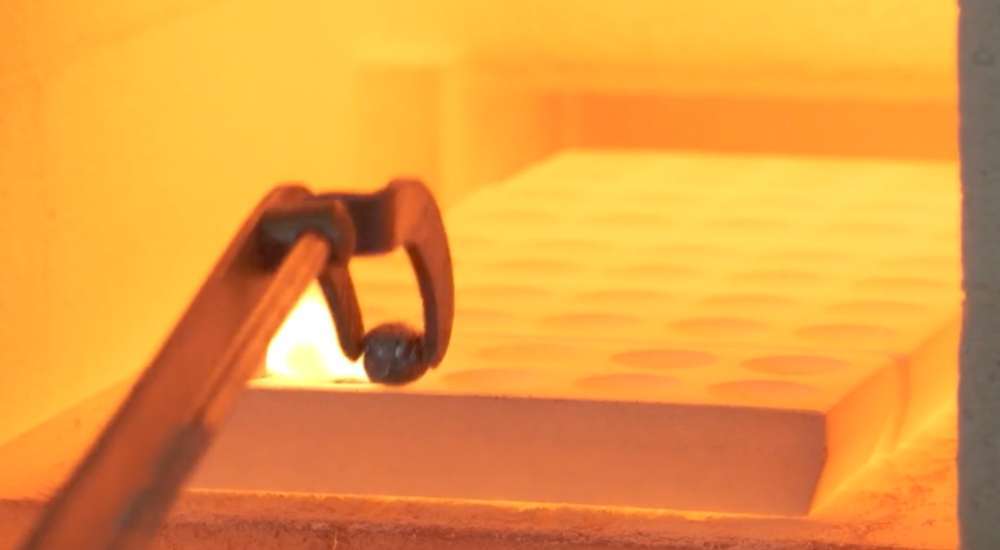
Then, we heat the sample in a porous cupel at 1100°C. As it heats, the lead oxidizes and absorbs into the cupel along with the base metal oxides. Meanwhile, the precious metal remains unabsorbed and forms a bead in the cupel.
Step 5: Rolling And Flattening
After cooling, we carefully remove the bead from the cupel and flatten it into a thin strip. Rolling the bead increases its surface area for the next step, ensuring the acid treatment is effective and removing all traces of non-gold metals.
Step 6: Parting
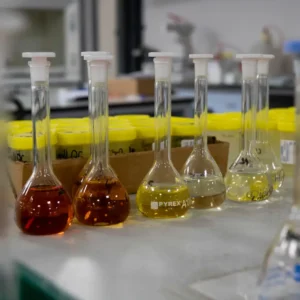
Next, we place the rolled metal in Nitric acid, which dissolves any leftover silver, leaving only pure gold. This critical step, called parting, isolates the gold completely, ensuring an accurate result. After the acid treatment, we rinse and carefully dry the pure gold cornet, which is now free of impurities.
Step 7: Final Weighing
Finally, we weigh the cornet with a high-precision balance to determine the exact amount of gold present, giving us the sample’s purity and overall gold quantity
Why Fire Assay? This method is trusted for its accuracy and reliability in determining gold purity.
Find out more about our Fire Assay testing services on our Analytical Laboratory pages.
Other Posts

What are the GPSR compliance requirements?
If you make, import, distribute or sell consumer products, you may have heard about the General Product Safety Regulation (GPSR) and wondered what it means for your business. So, what are the GPSR compliance requirements?
How to Read a UK Hallmark: A Beginner’s Guide
Found a tiny collection of letters, numbers and symbols on your jewellery and wondered what they mean? In this simple guide, we’ll break down how to read a UK hallmark, step by step.

Birmingham Heritage Week 2026
We’re looking forward to opening the doors of Birmingham Assay Office to the public again as part of Birmingham Heritage Week 2026. The city-wide initiative has grown year on year and we enjoyed two sell-out tours of the hallmarking floor in 2025.

A Medal for a Legend: Ozzy Osbourne
Fans, friends, and family came together last week at Merlin’s Bar to remember Ozzy Osbourne on the 21st July, the eve of the first ever official Ozzy Day. We were given a moment with Sharon so that Sally Costen could present her with the medal she designed in Ozzy’s honour.
Understanding Your Jewellery Valuations
Inherited a family heirloom, purchased a new engagement ring, or have built your own a collection of fine jewellery? Knowing its true value is more important than many people realise.